What Your Child Is Expected to Know in Year 7 Maths (Australia)
Introduction
Year 7 marks a clear turning point in mathematics. This is where students move from primary-style learning into formal, structured mathematical thinking. They no longer treat ideas as isolated topics; instead, students recognise patterns, use general rules, and apply concepts consistently across different contexts.
Maths in Year 7 becomes more abstract. Algebra is no longer just about noticing patterns but about using symbols (x, y, z, etc) to represent relationships. They learn to treat fractions, decimals, and percentages as interconnected number systems, not separate skills. Focus should be on accuracy, clarity, and logical reasoning.
Teachers expect students to work more independently. Questions are longer, instructions are more compact, and multiple concepts are often assessed together. Explaining why something works becomes just as important as getting the correct answer.
Understanding what Year 7 maths involves helps parents recognise that this year is not simply a continuation of Year 6. It is the foundation year for secondary mathematics, and confidence developed here strongly influences how students cope in later years.
Number (Integers, Rational Numbers, and Reasoning)
In Year 7, number work becomes more formal and more systematic. Students are expected to work confidently with integers, including positive and negative numbers (directed numbers), and to apply them across a wide range of problems.
Negative numbers play a significant role in Year 7 maths. Students compare, order, and operate with integers and use them meaningfully in contexts such as temperature, elevation, and financial change. Reasoning about direction and relative size is essential.
Fractions, decimals, and percentages get a new name – rational numbers – within a single connected system. Students convert fluently between forms, operate with them, and apply them in problem-solving situations that require careful interpretation rather than routine calculation.
Estimation and checking become more important at this stage. Teachers expect students to judge whether an answer is reasonable and to recognise errors caused by incorrect assumptions or careless handling of signs and place value.
Year 7 number work places strong emphasis on structure and consistency. Students who rely purely on memorised procedures often struggle, while those who understand how number systems fit together adapt more smoothly.
Algebra (Expressions, Substitution, and Relationships)
Algebra becomes a central focus in Year 7 and is treated as a language for describing relationships, not just a new topic to memorise.
Students work with algebraic expressions, learning to interpret, write, and simplify them correctly. They use letters to represent unknowns or changing quantities, and understand what an expression means rather than treat it as a set of instructions to follow mechanically.
Substitution is an important skill at this stage. Students replace variables with given values and evaluate expressions accurately, paying close attention to the order of operations. Errors often arise when students rush substitutions or misinterpret the order in which the operations apply.
In Year 7, students also explore relationships through tables, patterns, and simple formulas. Rather than extending patterns term by term, they describe general rules that apply to any case. This marks a clear step away from primary-style pattern work.
Many students find Year 7 algebra challenging because it demands precision in notation and language. Small misunderstandings, such as confusing addition with multiplication or misreading expressions, can have a significant impact if not addressed early.
Developing confidence with algebra in Year 7 is crucial, as it underpins much of the mathematics studied in later years.
Fractions, Decimals, Percentages, and Ratios
In Year 7, students move beyond recognising connections between fractions, decimals, and percentages and begin to operate with them in a more formal and consistent way. Accuracy, structure, and correct notation become increasingly important.
Students perform the four operations with fractions and decimals, often within multi-step problems. Unlike earlier years, methods are expected to be applied systematically rather than informally. Understanding why a method works helps students avoid common errors, especially when working with unlike denominators or decimal place value.
Percentages are used more flexibly and appear in a wider range of contexts, including comparison problems, increase and decrease, and interpreting real-world information. Students must decide which representation is most efficient for a given problem rather than being told which form to use.
In Year 7, ratios are introduced as a structured way to compare quantities. Students learn to interpret ratios as relationships, not as two separate numbers. They simplify ratios, compare ratios, and use them to represent situations such as mixtures, scale, and part–part or part–whole comparisons.
A common difficulty is treating ratios like subtraction or assuming a ratio automatically tells you the total. Students also confuse ratios with fractions unless they clearly understand what each number in the ratio is referring to. Year 7 expects students to read ratio statements carefully and apply them consistently to solve problems.
A key challenge at this stage is managing multiple representations within the same question. Students may need to convert between forms mid-solution or interpret information presented in one form before calculating in another.
Difficulties often arise when students rely on rules without understanding the underlying relationships. Careful reasoning and clear organisation are essential to working confidently with rational numbers at this level.
Measurement (Units, Scale, and Formula Use)
In Year 7, measurement becomes more formal and formula-driven. Teachers expect students to work confidently with standard units, apply formulas accurately, and interpret results within real-world contexts.
Students calculate perimeter, area, and volume using established formulas rather than informal reasoning. Correct substitution into formulas and careful handling of units are essential. Errors often occur when students mix units, substitute values incorrectly, or apply the wrong formula to a situation.
In Year 7, students learn about the Pythagoras’ Theorem as a method for finding unknown lengths in right-angled triangles. The focus is on identifying a right angle correctly, understanding which side is the hypotenuse, and applying the relationship consistently.
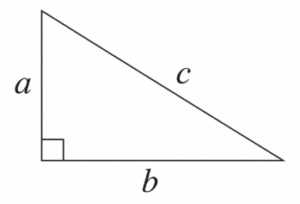
Students commonly make mistakes by using Pythagoras on triangles that are not right-angled, mixing up the hypotenuse, or substituting values incorrectly. Year 7 expects careful diagram reading and accurate setup, because the logic depends entirely on the triangle being right-angled.
Scale and proportional reasoning play a larger role at this stage. Students interpret scaled diagrams, maps, and plans, and use ratios to determine actual distances or measurements. This requires careful reading and attention to detail.
Time and rate-related problems may also appear, requiring students to interpret schedules, compare durations, or reason about quantities measured over time. These problems often combine measurement with number or algebraic thinking.
Measurement in Year 7 rewards methodical thinking and precision. Students who rush or rely on intuition instead of structured methods often struggle, while those who organise their work carefully tend to perform more consistently.
Geometry (Angles, Properties, and Transformations)
Geometry in Year 7 places greater emphasis on precision, properties, and logical reasoning. Students are expected to analyse shapes using correct terminology and to justify conclusions rather than rely on visual estimation.
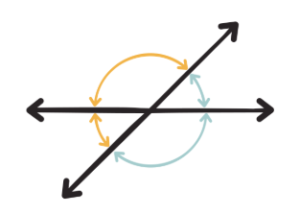
Angle work becomes more structured. Students identify and use angle relationships such as complementary, supplementary, vertically opposite, and adjacent angles, and apply these ideas within geometric figures and everyday contexts. Accurate reasoning matters more than simply recognising a diagram.
Year 7 expects students to distinguish between congruence and similarity clearly. Congruent shapes are exactly the same size and shape, while similar shapes have the same shape but are enlarged or reduced by a scale factor.
The challenge here is precision. Students often assume shapes are congruent just because they “look the same,” or assume similar shapes must have equal side lengths. Year 7 requires students to reason using corresponding sides and angles and to explain why shapes match exactly or match by scaling.
Students also work with the properties of 2D and 3D shapes, including triangles, quadrilaterals, prisms, cylinders, cones, and pyramids. They classify shapes based on sides and angles and explain how different properties are related.
Transformations are treated more formally. Students describe and apply translations, reflections, and rotations, paying attention to orientation and position. Understanding that transformations preserve shape and size is a key idea at this level.
Geometry questions in Year 7 often require students to interpret diagrams carefully and explain their thinking step by step. Weak diagram-reading skills or imprecise language can lead to errors even when the underlying understanding is sound.
Data & Statistics (Graphs, Averages, and Interpretation)
In Year 7, data handling moves beyond reading values from graphs to analysing information and drawing justified conclusions. Students are expected to interpret data critically rather than treat graphs as simple pictures.
Students work with a range of representations, including column graphs, line graphs, and pie charts. They are expected to read scales accurately, compare categories, and describe trends or patterns shown in the data.
A key development at this stage is the use of different “centres” of a data set – the mean, median, and mode. Students learn that these measures can give different impressions of the same data, and they must decide which measure makes sense in context.
Many students struggle because they treat all “averages” as interchangeable. Common errors include finding the median without ordering data, calculating the mean incorrectly, or choosing the mode when it does not represent a typical value. The key Year 7 skill is not just calculating these measures but interpreting what each one communicates about the data.
Questions increasingly require students to evaluate statements using data. Rather than simply finding a value, students may need to decide whether a claim is reasonable based on the information provided.
In Year 7, travel graphs are used to assess a student’s ability to interpret movement, not perform calculations mechanically. Students read and analyse distance–time graphs to describe motion rather than plot graphs step by step.
A key idea is understanding what the slope of the graph represents. Students interpret steeper slopes as faster speeds and horizontal segments as periods of rest. They must also recognise when an object is moving away from or back toward a starting point.
Common difficulties arise when students confuse distance with speed or assume that a higher graph always means faster movement. Year 7 questions often require written explanations, asking students to describe journeys, compare sections of motion, or explain changes shown on the graph.
Travel graphs test reading accuracy, interpretation, and logical explanation more than arithmetic skill, making them an important diagnostic topic at this level. Careful attention to labels, scales, and context is essential.
Chance (Probability and Language of Likelihood)
In Year 7, chance is treated more explicitly as probability, with an increased emphasis on precise language and logical reasoning. Students are expected to describe likelihood accurately and to justify their conclusions using evidence rather than intuition.

Students compare events using terms such as certain, likely, unlikely, and impossible, and begin to relate these ideas to numerical reasoning. They consider all possible outcomes of simple experiments and reason about which outcomes are more or less probable.
A key challenge at this stage is distinguishing between theoretical probability and everyday expectation. Students may assume that outcomes “should” occur based on intuition rather than analysing the structure of the situation.
Questions often require students to explain their thinking clearly, especially when comparing probabilities or evaluating statements about chance. Organisation and completeness of reasoning are essential to avoid missing outcomes or double-counting possibilities.
Developing disciplined thinking about probability in Year 7 helps prepare students for more formal probability calculations introduced in later years.
Where Year 7 Students Commonly Struggle
Year 7 is often a turning point in mathematics because students are expected to work more independently and justify their thinking with greater precision. Many difficulties at this stage are not due to weak arithmetic but to gaps in interpretation, organisation, and mathematical language.
Students may struggle when problems require them to combine multiple ideas, such as using algebra within a measurement context or interpreting data before performing calculations. Unlike earlier years, questions are less guided and expect students to decide which method or concept applies.
Another common challenge is adapting to the increased use of formal notation and terminology. Small errors in symbols, labelling, or units can lead to incorrect answers even when the underlying understanding is present.
Some students also find it difficult to adjust to problems that require explanation rather than just an answer. Being able to describe reasoning clearly is an important expectation in Year 7 and often takes time to develop.
Identifying and addressing these challenges early helps prevent small misunderstandings from becoming larger obstacles as mathematics becomes more abstract in later years.
How Parents Can Support at Home
In Year 7, the most effective support parents can provide is helping children adapt to the structure and expectations of secondary mathematics.
Encouraging good mathematical habits matters more than practising large numbers of questions. This includes reading questions carefully, organising working clearly, and checking whether answers make sense in context. These skills are now assumed rather than taught explicitly.
Parents can also help by normalising struggle. Year 7 introduces new notation, formal methods, and abstract ideas, and it is common for confident primary students to feel unsettled initially. Reassurance that adjustment takes time can reduce anxiety and resistance.
Discussing how maths ideas connect across topics – such as algebra appearing in measurement or data – can help students see mathematics as a coherent system rather than disconnected units.
When Extra Support May Be Needed
In Year 7, extra support may be needed when difficulties persist beyond the initial adjustment period. Struggle that continues after the first term often indicates gaps that require targeted attention.
Warning signs include confusion with algebraic notation, difficulty interpreting graphs or diagrams, or frequent errors caused by misreading questions rather than calculation mistakes. Students may also become frustrated when required to explain their reasoning in writing.
Another indicator is over-reliance on memorised procedures. If a student can perform steps when shown but cannot decide what to do independently, this suggests a need for support focused on reasoning rather than repetition.
Early intervention in Year 7 is particularly valuable because concepts introduced here form the foundation for Years 8–10. Addressing misunderstandings now prevents compounding difficulty later.
Next Steps for Parents
Year 7 is not about mastering everything immediately; it is about learning how secondary mathematics works. The emphasis on structure, reasoning, and explanation reflects the expectations students will face in later years.
Parents who understand this shift are better positioned to support their child through the transition. Monitoring progress, encouraging clear working habits, and responding early to sustained difficulty can make a significant difference.
With the right guidance and expectations, Year 7 can become a stabilising year that builds confidence and prepares students for the more abstract mathematics that follows.
Related Links