What Parents Should Know About Grade 5 Math (Common Core)
Introduction
Fifth grade marks a significant turning point in elementary mathematics. At this level, students begin transitioning from foundational arithmetic into concepts that directly prepare them for middle school math. The expectations increase not just in difficulty, but in depth of understanding and independence.
The Common Core standards for Grade 5 place strong emphasis on multi-digit operations with larger numbers, decimal operations, and advanced fraction concepts. Students are expected to compute accurately while also understanding the reasoning behind each procedure. Clear explanation and structured thinking become increasingly important.
Fractions expand into multiplication and division, decimals extend to the thousandths place, and place value reasoning becomes more sophisticated. Measurement includes volume, coordinate graphing is introduced, and geometry begins connecting more closely to algebraic thinking.
Because many of these topics build directly toward middle school mathematics, Grade 5 often feels like a bridge year. Students who develop confidence with fractions, decimals, and multi-step reasoning during this year enter middle school far better prepared.
With consistent practice and encouragement to explain their thinking, most students rise to the challenge and develop stronger mathematical independence.
Number and Place Value (Whole Numbers and Decimals to the Thousandths)
In fifth grade, place value understanding becomes both broader and more precise. Students extend their work with whole numbers and deepen their understanding of decimals, building a foundation that supports all later work with operations and algebra.
Whole-number place value continues to emphasize the structure of the base-ten system. Students read, write, compare, and round numbers confidently, but the reasoning becomes more refined. They are expected to explain how digits relate to one another and recognize patterns within powers of ten. For example, they learn that multiplying a number by 10, 100, or 1,000 shifts its digits in predictable ways. This understanding strengthens mental math and prepares students for scientific notation in later grades.
A major development this year is working with decimals to the thousandths place. Students learn to understand and represent numbers such as 0.375 or 2.406, recognizing the value of each digit based on its position. They analyze how tenths, hundredths, and thousandths relate to one another, seeing that each place is one-tenth the value of the place to its left.
Students compare and order decimals using place-value reasoning rather than relying on superficial comparisons. They learn to align decimal points carefully and examine each place from left to right when determining which number is greater.
Rounding extends to decimals as well. Students round decimals to a specified place value, such as the nearest tenth or hundredth, and use rounding to estimate sums, differences, products, and quotients. Estimation remains an important tool for checking whether answers are reasonable.
Understanding place value at this level directly supports later work in decimal operations. When students see decimals as extensions of the base-ten system rather than separate or mysterious numbers, computation becomes far more logical and manageable.
This section sets the stage for the more advanced operations that follow. Strong place-value reasoning is essential before moving into decimal addition, subtraction, multiplication, and division.
Multi-Digit Operations (Whole Numbers and Decimals)
By fifth grade, students are expected to perform multi-digit operations with greater fluency and confidence. The emphasis remains on understanding why procedures work, but accuracy and efficiency also become important goals. These skills form the backbone of much of the work students will encounter in middle school.
In fifth grade, multi-digit whole numbers are multiplied using the standard algorithm. While kids may have practiced partial products and area models in earlier grades, the focus now shifts toward mastering the traditional method while maintaining a clear understanding of place value. Each step of the algorithm reflects regrouping within the base-ten system, and students are expected to recognize that connection.
Division also expands significantly. It now includes multi-digit whole numbers with two-digit divisors. Rather than memorizing steps mechanically, students use place-value reasoning to estimate quotients, determine how many groups fit into each place value, and interpret remainders appropriately. Estimation continues to serve as a tool for verifying answers.
A major development in fifth grade is the introduction of operations with decimals. Students add and subtract decimals by aligning place values, reinforcing their understanding of the decimal system. They learn that decimal addition and subtraction follow the same principles as whole-number operations when place values are aligned correctly.
Multiplying decimals builds on place-value patterns. Students observe how multiplying by powers of ten shifts digits and apply similar reasoning when multiplying decimals by whole numbers or other decimals. They learn to place the decimal point logically based on the value of the factors, rather than relying solely on memorized rules.
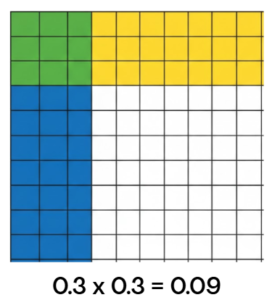
Dividing decimals is introduced conceptually, often beginning with dividing decimals by whole numbers. Students reason about how the quotient relates to the size of the divisor and use estimation to check reasonableness.
Throughout this unit, multi-step word problems require students to combine operations thoughtfully. They must determine which operations are needed, organize their work carefully, and verify that their answers make sense in context.
This section demands careful attention to detail, but when students rely on place-value understanding rather than memorized tricks, multi-digit operations become far more manageable and less intimidating.
Fractions (Multiplication, Division, and Deeper Reasoning)
Fractions become more powerful and more complex in fifth grade. Students move beyond adding and subtracting fractions with like denominators and begin multiplying and dividing fractions in meaningful ways. This is one of the most important units of the year because it directly prepares students for middle school algebra and proportional reasoning.
Students first deepen their understanding of fraction multiplication. Rather than memorizing procedures, they learn that multiplying fractions can represent scaling. For example, multiplying a number by a fraction less than one results in a smaller product. This idea challenges the earlier belief that multiplication always makes numbers larger.
When multiplying a fraction by a whole number, students interpret the operation as repeated addition. When multiplying two fractions, they often use area models to visualize the product. These visual models reinforce why the numerator multiplies with the numerator and the denominator multiplies with the denominator.
Division of fractions is introduced conceptually. Students explore situations such as determining how many one-third portions fit into one-half. Rather than immediately learning the “invert and multiply” (keep-change-flip) rule, they begin with visual reasoning and real-world contexts to understand what fraction division represents.
Students also solve word problems involving fractions in practical situations. These problems often require careful interpretation and logical sequencing. For example, a recipe may require a fraction of an ingredient, or a distance problem may involve fractional units.
Throughout this unit, fractions are treated as numbers that can be multiplied, divided, compared, and interpreted in context. Students are encouraged to explain why their answers make sense rather than relying on mechanical steps.
Strong fraction understanding at this level significantly reduces difficulty in later grades, especially when working with ratios, proportions, and algebraic expressions.
Measurement and Data (Volume and Coordinate Graphing)
Measurement in fifth grade becomes more spatial and more closely connected to geometry and algebraic thinking. Students move beyond area and perimeter into three-dimensional reasoning, while also learning to interpret data in new visual formats.
One of the most significant additions this year is volume. Students learn that volume measures the amount of space inside a three-dimensional figure. They begin by building rectangular prisms using unit cubes, helping them see volume as layers of equal-sized units stacked together.
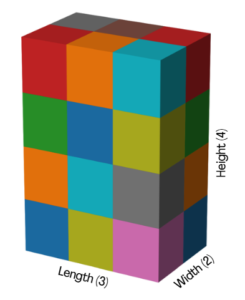
From this concrete understanding, students develop formulas for volume. They learn that the volume of a rectangular prism can be found by multiplying length, width, and height. Rather than memorizing the formula immediately, they connect it to repeated addition and multiplication, recognizing that volume represents layers of area stacked vertically.
Word problems involving volume often require multi-step reasoning. Students may need to determine one missing dimension, compare volumes, or calculate how many smaller cubes fit into a larger structure. These problems strengthen spatial visualization and arithmetic fluency at the same time.
Another important concept introduced in fifth grade is the coordinate plane. Students learn to graph points using ordered pairs, identifying horizontal and vertical distances from the origin. This skill marks the beginning of algebraic and graphical reasoning.
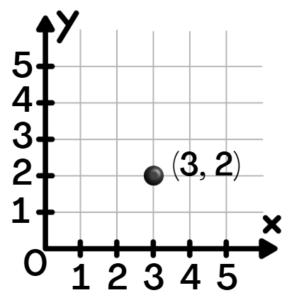
When students plot points and interpret coordinate relationships, they begin to see mathematics as a visual system. Understanding ordered pairs prepares them for graphing lines and functions in higher grades.
Measurement and data at this level also reinforce fraction and decimal skills. Problems often combine unit conversions, volume calculations, and decimal reasoning, encouraging students to connect ideas rather than treat them as separate topics.
This unit strengthens both spatial awareness and analytical thinking. When students understand volume conceptually and become comfortable plotting points, they are building essential tools for future math success.
Geometry (Classifying Shapes and Understanding Properties)
Geometry in fifth grade deepens students’ ability to analyze and classify shapes based on their properties. Rather than simply naming figures, students explore how different shapes are related and how they fit into broader categories.
One of the key ideas at this level is hierarchical classification. Students learn that some shapes belong to larger families because they share specific attributes. For example, they understand that rectangles are a type of parallelogram because both have two pairs of parallel sides. They also recognize that a square is a special type of rectangle, since it has four right angles and all sides equal in length. This layered classification encourages flexible thinking and prevents students from viewing shapes as isolated categories.
Students continue working with parallel and perpendicular lines, as well as angle measurement. They analyze how side lengths and angle measures determine a figure’s classification. Instead of memorizing definitions, they reason about why a shape fits a category based on its properties.
Geometry also connects closely to coordinate graphing. When students plot points and construct figures on the coordinate plane, they begin to see how geometric ideas and number relationships interact. They learn that shifting a shape’s position does not change its classification, reinforcing the idea that properties define a shape – not its orientation.
Throughout this unit, students are expected to explain their reasoning clearly. Being able to justify why a figure belongs to a particular group strengthens both mathematical vocabulary and logical thinking.
Problem Solving and Mathematical Thinking (How Common Core Ties Everything Together)
By fifth grade, problem solving becomes the central thread that connects all areas of mathematics. Students are no longer working through isolated exercises; they are expected to combine concepts from place value, decimals, fractions, measurement, and geometry within single problems.
Word problems at this level frequently involve multiple steps and careful interpretation. A student might need to convert units, multiply decimals, and then divide to determine a final answer. These tasks require planning, organization, and persistence rather than quick computation alone.
Reasoning plays a critical role. Students are expected to explain why an operation makes sense in a given situation and justify their conclusions using equations or visual models. When working with fractions or decimals, they must consider the size of the numbers and determine whether the result should be larger or smaller than the original quantities.
Estimation remains an essential strategy. Before calculating a decimal product, for example, students are encouraged to approximate the numbers to anticipate the size of the result. After solving, they check whether their answer is reasonable. This habit strengthens independence and reduces careless errors.
Precision in mathematical language becomes more important as well. Students learn to use terms such as factor, multiple, quotient, coordinate, volume, and parallel accurately when describing their reasoning. Clear communication supports clearer thinking.
Perhaps most importantly, fifth grade encourages students to approach unfamiliar problems with confidence. They learn to try a strategy, revise it if necessary, and persist until the problem is resolved. This mindset prepares them for the increasing abstraction of middle school mathematics.
When students begin to see how decimal operations connect to place value, how fraction multiplication relates to area models, and how coordinate graphing ties geometry to arithmetic, mathematics becomes a coherent system rather than a collection of separate skills.
Conclusion: How Parents Can Support Grade 5 Math Success
Fifth grade is often the year when students begin to sense that mathematics is becoming more sophisticated. The topics are broader, the numbers are larger, and the reasoning required is more deliberate. At the same time, this is an excellent opportunity for students to build lasting confidence before entering middle school.
One of the most helpful things parents can do is shift the focus from simply getting answers correct to understanding how ideas connect. When a child solves a decimal problem or multiplies fractions, encouraging them to explain what the numbers represent helps strengthen long-term understanding. Even brief conversations about why an answer makes sense can reinforce important concepts.
Regular exposure to real-world math situations can also be beneficial. Estimating totals while shopping, measuring ingredients when cooking, or discussing distances on a map makes mathematics feel practical and meaningful. These everyday experiences naturally support skills in decimals, fractions, and measurement.
As concepts grow more complex, it is normal for students to need time to adjust. Struggles often signal that a new level of thinking is developing rather than a lack of ability. Patience, steady practice, and reassurance go a long way in helping students stay motivated.
By the end of fifth grade, students who are comfortable working with decimals, fractions, volume, and coordinate graphs are well positioned for the challenges ahead. With thoughtful support and consistent practice, this year can become a strong launching point into middle school mathematics.
Related Links