What Your Child Is Expected to Know in Year 8 Maths (Australia)
Introduction
Year 8 mathematics represents a decisive shift from learning methods to working with mathematical structures. Concepts introduced in earlier years, such as algebra, number relationships, and geometry, are now treated formally and applied across unfamiliar contexts.
At this stage, students are expected to manipulate algebraic expressions with confidence, solve equations and inequalities, and interpret graphs as representations of relationships rather than just pictures. Topics such as factorisation, linear graphs, scale factors, and applications of Pythagoras’ Theorem require careful reasoning and accurate notation.
Maths in Year 8 is less forgiving of gaps. Small misunderstandings in algebraic language, number sense, or geometric reasoning can quickly compound when topics are combined. Students are also expected to work more independently, choosing appropriate strategies rather than following guided steps.
Understanding what Year 8 maths involves helps parents recognise that this year is not about learning more topics, but about thinking mathematically with precision and consistency. Confidence developed here strongly influences success in later secondary mathematics.
Number (Directed Numbers, Fractions, and Proportional Thinking)
In Year 8, number work is treated as a connected system rather than a collection of skills. Students are expected to reason fluently with directed numbers, including operating confidently with positive and negative values in calculations and real-world contexts.
Fractions and mixed numerals are handled with greater precision. Students perform operations accurately and interpret results meaningfully, particularly when answers are not whole numbers. Misunderstandings often arise when students apply whole-number thinking to fractional contexts.
Decimals, fractions, and percentages are used interchangeably and often appear within the same problem. Students must select the most appropriate representation rather than rely on instruction cues. This demands strong proportional thinking and careful interpretation.
Mental calculation strategies, including efficient division methods, are also emphasised. Students are expected to recognise when mental strategies are appropriate and to justify their approach, not simply arrive at an answer.
Chance appears within number work as students reason about likelihood using fractions and proportions. The focus is on logical interpretation rather than intuition.
Year 8 number work rewards conceptual understanding and flexibility. Students who rely on memorised procedures without understanding often struggle as problems become less structured.
Algebra (Expressions, Factorisation, and Linear Relationships)
Algebra in Year 8 becomes a core mathematical tool, not just a topic. Students are expected to manipulate expressions confidently, recognise equivalent forms, and use algebra to represent and solve relationships.
Students work with equivalent expressions, learning that different-looking algebraic forms can represent the same value. This requires careful attention to structure rather than surface appearance. Errors often occur when students simplify mechanically without understanding how terms relate.
Factorisation is introduced as a reverse process to expansion. Students identify common factors and rewrite expressions in factorised form, which is a key foundation for later algebraic work. This concept is often challenging because it requires students to think flexibly about number and algebra together.
Solving linear equations and inequalities is a major focus. Students are expected to apply systematic methods, interpret solutions correctly, and understand what a solution represents. Inequalities, in particular, introduce new notation and reasoning that many students find unfamiliar.
Students also graph linear equations, linking algebraic rules to graphical representations. Understanding how changes in an equation affect the shape and position of a graph is more important than plotting points mechanically.
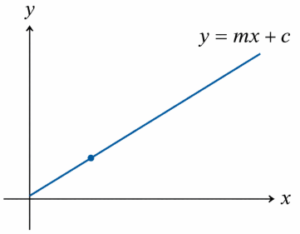
Year 8 algebra demands precision, consistency, and logical reasoning. Small notation errors or misunderstandings can significantly affect outcomes, making careful working habits essential.
Data (Representation, Analysis, and Interpretation)
In Year 8, data work shifts from reading graphs to analysing and interpreting information critically. Students are expected to select appropriate representations, compare datasets, and justify conclusions using numerical evidence.
Students work with a wider range of data displays, including column graphs, line graphs, and more structured tables. Accuracy in scales, intervals, and labels is assumed, and careless construction often leads to misinterpretation.
A key focus is data analysis rather than presentation. Students calculate and interpret measures such as mean, median, mode, and range, and must decide which measure is most appropriate in a given context. This introduces the idea that data summaries can tell different stories depending on how they are used.
Students are also expected to recognise outliers and understand how they affect averages. Many errors arise when students compute statistics correctly but fail to explain what the results actually mean in context.
Unlike earlier years, Year 8 students must now evaluate claims based on data, not just extract values. This requires careful reading, logical reasoning, and attention to language used in questions.
Measurement (Pythagoras’ Theorem, Circles, and Volume)
Measurement in Year 8 becomes more formula-driven and application-focused. Students are expected not only to recall formulas, but to choose the correct one and apply it accurately in unfamiliar situations.
A major development at this level is the application of Pythagoras’ Theorem. Students use it to find unknown side lengths in right-angled triangles, often embedded in word problems involving distances, heights, or diagonal measurements. Unlike Year 6 or 7, problems are rarely presented in a neat diagram — students must first identify the right-angled triangle before applying the theorem.
Work with circles is also extended. Students calculate circumference and area, often needing to decide when to leave answers in terms of π and when to evaluate numerically. Confusion between radius and diameter is still a common source of error at this stage.
In volume, the focus moves to more complex solids such as cylinders and irregular prisms. Students must visualise three-dimensional objects and understand how area of cross-sections relates to volume. Errors often occur when students mix up surface area and volume, or apply the correct formula with incorrect units.
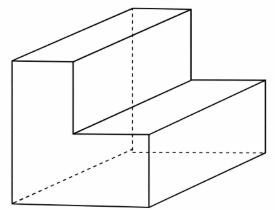
Overall, Year 8 measurement requires a stronger blend of spatial reasoning, algebraic substitution, and unit awareness than in previous years.
Space (Polyhedra, Angle Relationships, and Scale Factors)
Space and geometry in Year 8 place strong emphasis on structure, relationships, and proportional reasoning rather than simple shape recognition.
Students study polyhedra in more depth, identifying faces, edges, and vertices, and distinguishing between regular and irregular solids. They are expected to visualise solids from different viewpoints and interpret drawings that show hidden edges, a skill that becomes essential when working with nets and composite solids.
Work on angle relationships goes beyond naming angles. Students apply properties of vertically opposite angles, corresponding angles, and interior angles to deduce unknown angles logically, often across multi-step diagrams. A common difficulty at this stage is recognising which angles are related and which are not.
Scale factors introduce proportional reasoning into geometry. Students enlarge or reduce shapes and must understand how lengths, areas, and volumes change under scaling. Errors often occur when students apply the scale factor correctly to side lengths but forget that area and volume scale differently.
Overall, Year 8 geometry requires students to connect visual reasoning with algebraic thinking, explaining why relationships hold rather than simply stating results.
Where Year 8 Students Commonly Struggle
Year 8 is often the point at which mathematics begins to feel demanding even for students who have previously performed well. This is because the subject now relies heavily on abstract reasoning, symbolic manipulation, and multi-step thinking, rather than straightforward procedures.
A frequent difficulty is managing algebraic structure. Students may understand individual steps but struggle when expressions, equations, and graphs are combined within the same problem. Small errors in notation, sign handling, or factorisation can quickly derail an entire solution.
Another common challenge lies in applying known formulas in unfamiliar contexts. Topics such as Pythagoras’ Theorem, circle measurements, and volume of irregular prisms require students to first interpret diagrams correctly before deciding what mathematics applies. Misidentifying shapes or relationships often leads to incorrect results, even when formulas are known.
Students also find it challenging to reason proportionally, particularly in geometry. Scale factors, similarity, and enlargement require careful thinking about how quantities change, and assumptions based on appearance rather than calculation often lead to errors.
Finally, Year 8 questions increasingly require explanation and justification, not just answers. Students who are unused to articulating reasoning may find it difficult to communicate their thinking clearly, even when their intuition is sound.
Addressing these challenges early helps prevent misconceptions from becoming entrenched as mathematics becomes more abstract in later years.
How Parents Can Support at Home
In Year 8, effective support at home is less about checking answers and more about helping students develop structured mathematical thinking. Parents can play an important role by encouraging children to slow down, organise their working clearly, and reflect on whether results make sense.
One helpful approach is to ask students to explain their method aloud. Verbalising reasoning often reveals gaps in understanding that are not obvious from written work alone. This is particularly useful for algebra, geometry, and multi-step problems.
Encouraging careful use of mathematical language and symbols is also valuable. In Year 8, small notation errors can change the meaning of an entire solution. Helping students see the importance of accuracy builds habits that become essential in later years.
Parents can also support by helping students manage the increased workload and pace of secondary mathematics. Regular, short review sessions are often more effective than last-minute revision, especially as concepts build on one another.
The goal at this stage is not to remove challenge, but to help students respond to challenge thoughtfully and confidently.
When Extra Support May Be Needed
In Year 8, the need for extra support often becomes apparent when students can no longer rely on intuition or memorised steps to get through problems. Persistent difficulty at this stage usually reflects gaps in foundational understanding rather than a lack of effort.
Signs that additional support may be helpful include frequent errors in algebraic manipulation, difficulty interpreting diagrams or graphs, and confusion when problems combine ideas from different topics. Students may also struggle to keep track of steps in longer problems or become stuck deciding how to start.
Another indicator is increasing frustration or avoidance. When students feel overwhelmed by abstract notation or multi-step reasoning, confidence can drop quickly. This can lead to disengagement even in students who previously performed well.
Because Year 8 mathematics builds directly toward more formal secondary content, unresolved misunderstandings tend to compound rather than resolve themselves. Timely, targeted support can help students rebuild clarity and prevent small gaps from becoming major obstacles in later years.
Next Steps for Parents
Year 8 is a consolidation year for abstract thinking in mathematics. The focus shifts toward using algebra, geometry, and data analysis as interconnected tools rather than separate topics. Understanding this shift helps parents set realistic expectations and provide meaningful support.
Monitoring progress regularly is important, particularly in areas such as algebraic manipulation, proportional reasoning, and interpretation of diagrams. Addressing difficulties early allows students to regain confidence before concepts become more complex in later years.
Encouraging consistent study habits, clear written working, and thoughtful reflection on mistakes prepares students for the increasing demands of secondary mathematics. With appropriate guidance and timely support, Year 8 can become a strong foundation year that positions students well for future academic pathways.
Related Links