What Parents Should Know About Grade 6 Math (Common Core)
Introduction
Grade 6 math marks a clear shift from elementary arithmetic to more structured and abstract thinking. While earlier grades focus heavily on computation with whole numbers and fractions, sixth grade begins to organize those skills into broader mathematical systems. Students start working with ratios, negative numbers, algebraic expressions, and more formal problem-solving structures.
At this level, math becomes less about isolated procedures and more about relationships between quantities. Students analyze patterns, describe connections, and explain their reasoning in precise language. They move beyond simply calculating answers and begin interpreting what those answers mean.
Another major change is the introduction of variables and expressions. Instead of solving only numerical problems, students write and evaluate expressions that represent real situations. This development lays the foundation for algebra in grades 7 and 8.
The number system also expands. Students work fluently with fractions and decimals, but they now include negative numbers and understand how all rational numbers fit together on the number line.
Because Grade 6 builds the bridge between elementary math and middle school algebra, strong conceptual understanding becomes essential. Students who understand why procedures work tend to adjust more confidently to the increasing abstraction of later grades.
Ratios and Proportional Reasoning
Ratios form one of the most important shifts in Grade 6 math. Students begin comparing quantities in a structured way, describing relationships such as “3 cups of water for every 2 cups of rice” or “5 points scored for every game played.” Instead of working with single numbers, they now analyze relationships between two quantities.
Students learn to write ratios in multiple forms, including 3:2, 3 to 2, and \(\frac{3}{2}\). More importantly, they interpret what each number represents. They understand that a ratio compares two related quantities and that changing one affects the other.
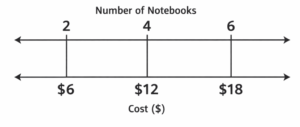
Tables, tape diagrams, and double number lines become important tools. These visual models help students see how equivalent ratios are formed by multiplying or dividing both parts of the ratio by the same number. For example, if 2 notebooks cost $6, students determine that 4 notebooks cost $12 by scaling the relationship rather than guessing.
Unit rates are introduced as a special type of ratio. Students calculate rates such as miles per hour or cost per item and use them to make comparisons. They learn to decide which product is the better buy or which speed is faster by analyzing rates carefully.
Problem solving becomes more layered at this stage. Students must determine what the ratio represents, choose the correct strategy, and explain their reasoning clearly. This early exposure to proportional thinking lays the groundwork for algebra and real-world applications in later grades.
The Number System (Fractions, Decimals, and Integers)
In Grade 6, students expand their understanding of numbers beyond positive whole numbers and basic fractions. They begin working fluently with all rational numbers, including negative numbers, decimals, and fractions, and they see how these values fit together on the number line.
Negative numbers are introduced in meaningful contexts such as temperature, elevation, and financial gain or loss. Students learn that numbers to the left of zero represent values less than zero and that opposites have the same distance from zero but different signs. This understanding builds a stronger sense of magnitude and direction.
Operations with fractions and decimals also become more systematic. Students divide fractions by fractions, multiply decimals with fluency, and solve real-world problems involving these numbers. Rather than relying only on procedures, they interpret what each operation represents. For example, dividing by a fraction is connected to asking how many groups of that fraction fit into a quantity.
The number line plays a central role. Students compare rational numbers by analyzing their position relative to zero and to one another. They understand that negative fractions and negative decimals follow the same ordering rules as integers.
Absolute value is introduced as distance from zero. Students recognize that distance is always positive, even if the number itself is negative.
By the end of this unit, students see the number system as one connected structure. This broader view prepares them for algebraic reasoning and more advanced problem solving.
Expressions and Equations
Grade 6 introduces students to formal algebraic thinking. For the first time, they regularly work with variables to represent unknown values. Instead of solving only numerical problems, students write expressions and equations to describe real situations.
An expression such as 4x + 7 now represents a relationship rather than a single number. Students evaluate expressions by substituting specific values and explain what the result means in context. They also learn that expressions do not contain an equal sign, while equations show that two quantities are equal.
Solving one-step equations becomes a central skill. Students solve problems such as x + 5 = 12 or 3x = 18 by reasoning about inverse operations. They understand that whatever operation is applied to one side of the equation must also be applied to the other side to maintain balance. This idea strengthens logical thinking and prepares them for multi-step equations in later grades.
Students also work with inequalities. They write statements such as x > 4 to represent a range of possible values and plot those solutions on a number line. This connects algebra back to their understanding of the number system.
Another key development involves recognizing patterns in tables and writing algebraic rules that describe those patterns. Students move from observing numerical relationships to expressing them symbolically.
By the end of this unit, students no longer see letters as mysterious symbols. Instead, they understand that variables simply represent numbers whose values can change. This shift marks a major step toward full algebra readiness.
Geometry (Area, Surface Area, and Volume)
In Grade 6, geometry becomes more three-dimensional and more closely tied to formulas. Students extend their earlier understanding of area and apply it to new contexts, especially surface area and volume.
They begin by finding the area of triangles and other polygons. Instead of memorizing formulas blindly, students connect the area of a triangle to the area of a rectangle. They see that a triangle covers half the area of a rectangle with the same base and height. This reasoning helps formulas make sense.
Surface area introduces a new way of thinking about three-dimensional shapes. Students examine nets of rectangular prisms and calculate the total area of all faces. Rather than plugging numbers into a formula without thought, they identify each face, determine its area, and then add the results together.

Volume becomes a central focus. Students learn that volume measures the number of unit cubes that fill a three-dimensional space. They apply the formula length × width × height to find the volume of rectangular prisms and explain why the formula works. Because they understand multiplication as scaling, they see volume as building layers of equal areas.
Real-world problems strengthen this understanding. Students calculate how much water a container can hold or how many small boxes fit inside a larger one. These problems require careful reasoning and unit awareness.
By the end of this unit, students recognize geometry as more than shapes and diagrams. They use formulas confidently while still understanding the structure behind them.
Statistics and Data
In Grade 6, students begin analyzing data in a more structured and quantitative way. Rather than simply reading graphs, they now summarize distributions and describe patterns using statistical language.
A major focus is understanding measures of center. Students calculate the mean as an equal share and recognize the median as the middle value in an ordered set. They also determine the range and describe how spread out a data set is. Instead of computing these measures mechanically, they interpret what each value reveals about the overall distribution.
Students learn to distinguish between statistical questions and non-statistical questions. A statistical question anticipates variability in data, such as “How many hours do students in this class sleep each night?” This shift encourages students to think about data as representing patterns rather than single answers.
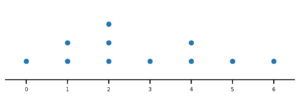
Dot plots and histograms become important tools. Students organize data visually, identify clusters and gaps, and draw conclusions supported by evidence. They compare data sets and explain differences in center and spread.
Another key development involves describing distributions in clear language. Students learn to explain whether data appears symmetrical, skewed, or evenly distributed. They support their observations with numerical evidence.
Through this work, students begin to see data analysis as a form of reasoning. They move beyond reading charts to making informed interpretations based on evidence. These skills lay the groundwork for probability and more advanced statistics in later grades.
Problem Solving and Mathematical Thinking (How Common Core Ties Everything Together)
In Grade 6, Common Core brings all strands of math together through deeper problem solving. Students are no longer practicing skills in isolation. Instead, they combine ratios, rational numbers, algebraic expressions, geometry, and data analysis within the same task.
A real-world problem might require writing an equation, interpreting a number line, calculating volume, and then explaining the result in context. Students must decide which tools apply and justify why their method works. This decision-making process is central to sixth-grade math.
Logical structure becomes more visible. When solving equations, students maintain balance on both sides. When comparing ratios, they scale relationships consistently. When analyzing data, they support conclusions with numerical evidence rather than guesswork.
Precision also matters more at this stage. Students define variables clearly, track units carefully, and communicate reasoning step by step. They learn that clarity is part of mathematics, not an optional extra.
By weaving together concepts from across the year, Grade 6 builds mathematical maturity. Students begin to see patterns, relationships, and structure – skills that form the bridge to pre-algebra and beyond.
Conclusion: How Parents Can Support Grade 6 Math Success
Grade 6 can feel like a turning point. The math becomes more abstract, and students begin thinking in more structured and symbolic ways. Support at home does not require advanced math knowledge, but it does require encouragement and consistency.
First, focus on understanding rather than memorization. Ask your child to explain how they solved a problem. Even if the explanation is imperfect, the act of verbalizing reasoning strengthens comprehension.
Second, reinforce number sense in everyday life. Discuss unit prices at the store, compare temperatures, or estimate totals while shopping. These small conversations build comfort with ratios and rational numbers.
Third, encourage careful work. Remind your child to label units, check calculations, and reread multi-step questions. Many sixth-grade errors come from rushing rather than misunderstanding.
Finally, normalize challenge. Some topics may feel difficult at first, especially those involving algebraic thinking. With steady practice and patience, confidence grows.
When students build strong habits in Grade 6, they enter the upper middle grades prepared not only for harder math, but for more independent thinking.
Related Links